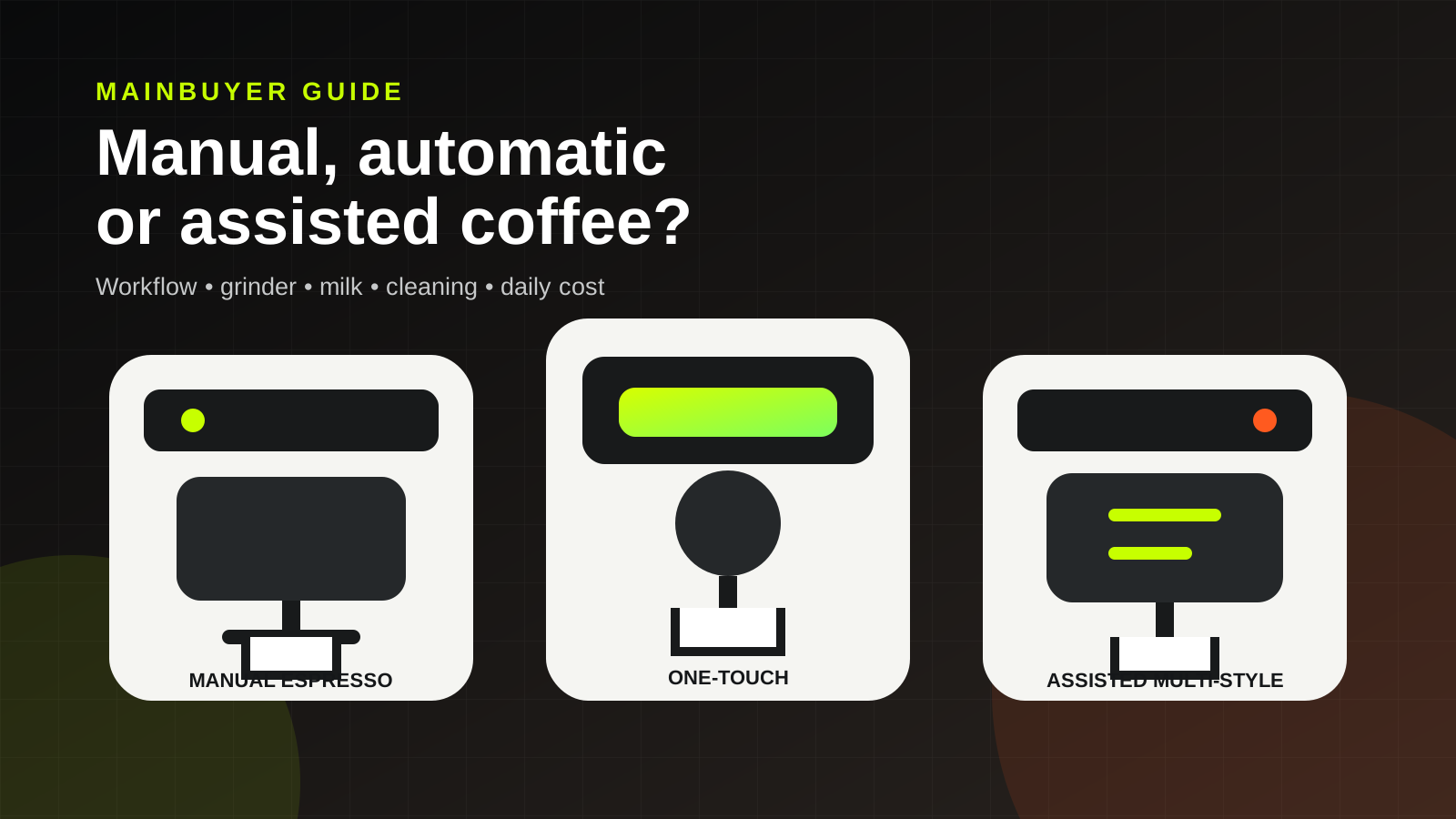
Quick answerOur recommendation in brief
Choose the Sage Barista Express when learning and adjustment are part of the appeal, the De'Longhi Magnifica Plus when one-touch convenience and shared household use matter most, and the Ninja Luxe Café Premier when several coffee styles and guided preparation are priorities. Before buying, decide who will use the machine, how many drinks are made together and who will clean it. The correct workflow matters more than the longest recipe list.
Swipe or scroll sideways to compare every product →
The shortlist explained
Why each product made the list
Best for learning espressoSage The Barista Express BES875UK
The integrated grinder and manual controls provide a practical route into hands-on home espresso without buying separate equipment immediately.
Best for: People who want to learn and adjust each drink
Read review and retailer links Best for one-touch drinksDe'Longhi Magnifica Plus ECAM320.70
Automatic grinding, brewing and milk recipes suit households that value consistency and convenience over manual technique.
Best for: Busy households wanting repeatable café-style drinks
Read review and retailer links Best for drink varietyNinja Luxe Café Premier ES601UK
It combines espresso, longer coffees and assisted settings for households with several preferences and users at different skill levels.
Best for: Homes that regularly make several coffee styles
Read review and retailer links Choose the workflow before choosing the machine
A manual espresso workflow involves grinding beans, dosing a portafilter, tamping, locking it into the group head, starting and stopping the extraction, then steaming milk when required. Many owners enjoy that process because it turns coffee into a skill and allows meaningful adjustment. Others find it slow and inconsistent before work. The Sage Barista Express reduces equipment clutter with an integrated grinder but still expects the user to learn dose, grind and milk texture.
A bean-to-cup machine automates most of those stages. The De'Longhi Magnifica Plus is the convenience-led option, preparing espresso and milk drinks through programmed recipes. The user still adjusts strength, quantity and cleaning, but the machine controls more of the process. The Ninja Luxe Café sits between formats, combining a portafilter with assisted recommendations and multiple drink styles. Decide whether preparation is a hobby, a shared household task or something that must be completed quickly with minimal thought.
Manual espresso offers control and demands consistency
The appeal of a manual machine is the ability to change grind size, dose, distribution, extraction time and milk texture. That flexibility helps when beans age or when switching between roasts. It also creates more ways to make a poor drink. Beginners should expect a period of adjustment and some wasted coffee. A pressure gauge, clear instructions and a widely supported accessory size can make learning easier, but they do not replace practice.
Integrated-grinder machines are convenient because the grinder and brewer share one footprint. The compromise is upgrade flexibility: if the grinder becomes the limiting component, replacing it may leave part of the integrated machine unused. The Barista Express remains a sensible first serious setup for someone who wants involvement without buying a separate grinder, scales and machine on day one. It is less suitable for a household that wants several milk drinks quickly with no interest in technique.
Bean-to-cup machines prioritise repeatability
A bean-to-cup machine grinds, doses and brews internally, which makes it easier for different household members to produce a similar drink. One-touch milk systems further reduce technique, especially for cappuccinos and lattes. The trade-off is reduced control over puck preparation and extraction compared with a manual portafilter. Recipe menus can look impressive, but many drinks are variations in coffee, milk and water quantities rather than completely different brewing methods.
The Magnifica Plus suits buyers who value speed and predictable results. User profiles and adjustable recipes can make it practical in a shared home, although every automatic machine still needs attention. Used coffee grounds, drip trays and milk components require frequent emptying or rinsing. Internal brewing units and water systems need maintenance according to the instructions. Convenience means fewer steps during drink preparation, not zero cleaning.
Assisted machines can bridge skill levels
An assisted machine attempts to keep the satisfying parts of manual coffee while guiding the difficult variables. The Ninja Luxe Café combines an integrated grinder, portafilter workflow and recommendations for settings, while also supporting longer coffee styles. This can work well in a household where one person wants to learn espresso and another wants clearer guidance. It also creates a larger, more complex appliance with more modes and components to understand.
Assistance should simplify decisions rather than hide them. Check whether the machine explains why it recommends a grind change, whether settings can be overridden and how easily it switches between bean types or drink sizes. A broad recipe list is useful only when the drinks you actually make are quick to select and clean up after. Buyers who drink almost exclusively espresso may prefer a simpler manual machine; those who want one-touch milk may still prefer a bean-to-cup system.
The grinder and beans shape the result
Fresh beans and consistent grinding are central to espresso. A grinder needs enough adjustment to respond to different roasts and changes in bean age. Very large steps can make it difficult to reach a balanced extraction, while excessive complexity can overwhelm a beginner. Hopper size is less important than keeping beans fresh; filling a large hopper with weeks of coffee may be less helpful than adding smaller amounts regularly.
Integrated grinders reduce clutter and simplify dosing, but they need cleaning and can retain some grounds. Switching between caffeinated and decaffeinated beans may be awkward unless the hopper can be emptied easily or the machine accepts pre-ground coffee. Households that regularly use two bean types should check the workflow before buying. Good water, correctly stored beans and repeatable preparation often improve drinks more than adding another preset.
Milk systems, water and cleaning affect daily ownership
A manual steam wand gives direct control over milk texture and temperature, but it takes practice and must be wiped and purged promptly. Automatic milk carafes are easier for repeatable drinks, yet their tubes and containers need thorough rinsing and often refrigeration between uses. Assisted frothing can reduce technique while retaining a separate jug. Consider dairy and plant-based milk, the number of consecutive drinks and who will clean the system.
Water hardness affects scale, flavour and maintenance. Use the supplied test or local information and configure filters or descaling intervals as directed. Check how the water tank is removed, whether it can be filled beneath cupboards and whether the drip tray and grounds container are easy to carry without spilling. A machine that makes excellent coffee but is awkward to refill and clean may be abandoned. Leave enough worktop height to access the bean hopper and enough width to use the steam wand comfortably.
Budget for the complete coffee setup
The purchase price is only part of the cost. Beans, water filters, descaler, cleaning tablets, milk-system cleaner and replacement seals or accessories all contribute. Manual machines may encourage spending on a better tamper, scales, baskets and distribution tools. Bean-to-cup machines can require proprietary cleaning products and milk components. None of these costs automatically make one format poor value; they should be understood before choosing.
Also value time. A manual drink may take longer but provide enjoyment and control. An automatic drink may cost more upfront but reduce morning effort for several users. The best value machine is the one that matches the household's repeated behaviour. Buying an advanced manual machine for someone who wants one button, or a fully automatic machine for someone who enjoys dialling in beans, usually wastes more money than choosing a slightly less capable machine in the correct format.
What to consider before buying
- Decide whether coffee preparation is a hobby or a convenience task.
- Count how many drinks must be made consecutively each morning.
- Choose a milk system that matches your willingness to clean it.
- Check access to the water tank and bean hopper beneath cupboards.
- Consider how easily the machine switches between regular and decaf beans.
- Budget for filters, cleaning products, descaling and replacement parts.
- Measure the complete working space, including room for a jug and portafilter.
- Use the exact water-hardness and maintenance guidance for the model.
Frequently asked questions
Is a bean-to-cup machine better than a manual espresso machine?
A bean-to-cup machine is better for speed and repeatability, while a manual machine offers more control and involvement. Neither format is universally better; the right choice depends on whether preparation is enjoyable or something you want automated.
Do coffee machines with built-in grinders make good espresso?
They can make very good espresso when the grinder offers suitable adjustment and the user or machine controls dose consistently. A separate grinder provides more upgrade flexibility but costs more and uses additional worktop space.
Which coffee machine is easiest to use?
A bean-to-cup machine with one-touch recipes is generally easiest for espresso and milk drinks. Capsule machines are simpler again, but they have a different ongoing cost and offer less control over beans and extraction.
How often should a coffee machine be cleaned?
Milk parts, steam wands, drip trays and used-coffee containers often need attention after each use or daily. Brewing units, filters and descaling follow longer intervals set by the manufacturer and local water hardness.
Is the Sage Barista Express suitable for beginners?
Yes, when the beginner wants to learn espresso and accepts a practice period. It is not the easiest choice for someone who wants consistently fast one-touch drinks without adjusting grind, dose or milk texture.
Can one machine make espresso and filter-style coffee?
Some assisted multi-style machines, including the Ninja Luxe Café platform, are designed to cover espresso and longer coffee styles. Traditional manual espresso and bean-to-cup machines focus more narrowly on espresso-based drinks.
Evidence and methodologyHow this guide was prepared
This guide uses official specifications, manufacturer guidance, retailer model information and MainBuyer editorial judgement. It explains trade-offs rather than claiming one product is right for everyone, and it does not describe research-based assessments as hands-on tests.
See how we review, our editorial policy and corrections policy.
Last editorial review: 2026-07-24
SourcesResearch references